Turn money stress into a plan you can actually run
Hi, I'm Brian. I'm a CPA in Halifax, and I help Canadians make sense of their money without the jargon or the sales pitch. I don't sell products, I don't take commissions, and I never manage your money. I help you see your options clearly, with the trade-offs, so you can pick the one that fits your life.
CPA • Former PwC • J&J consulting • Finance and IT at Sonos • Built for every province and territory
Here's what's behind the login
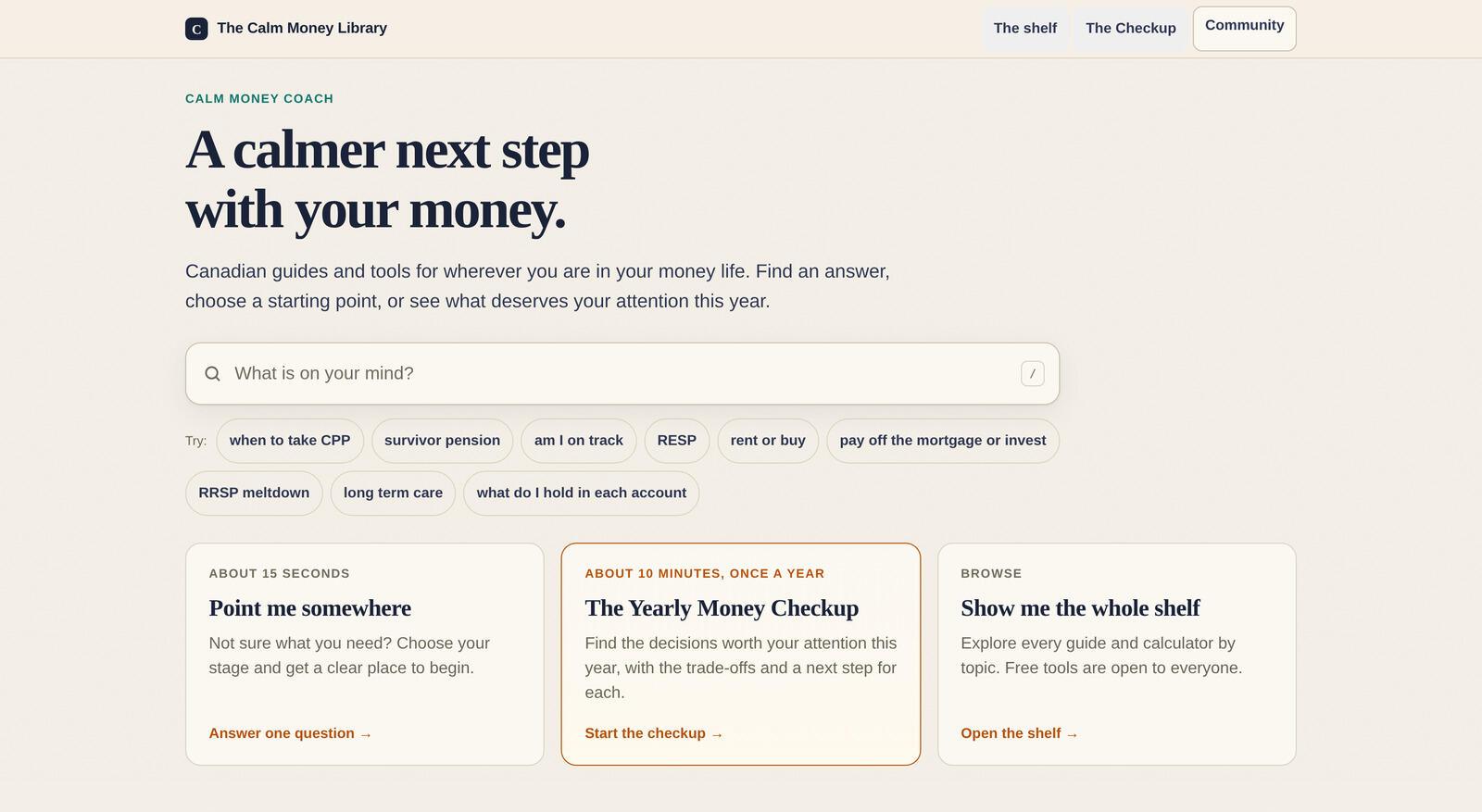
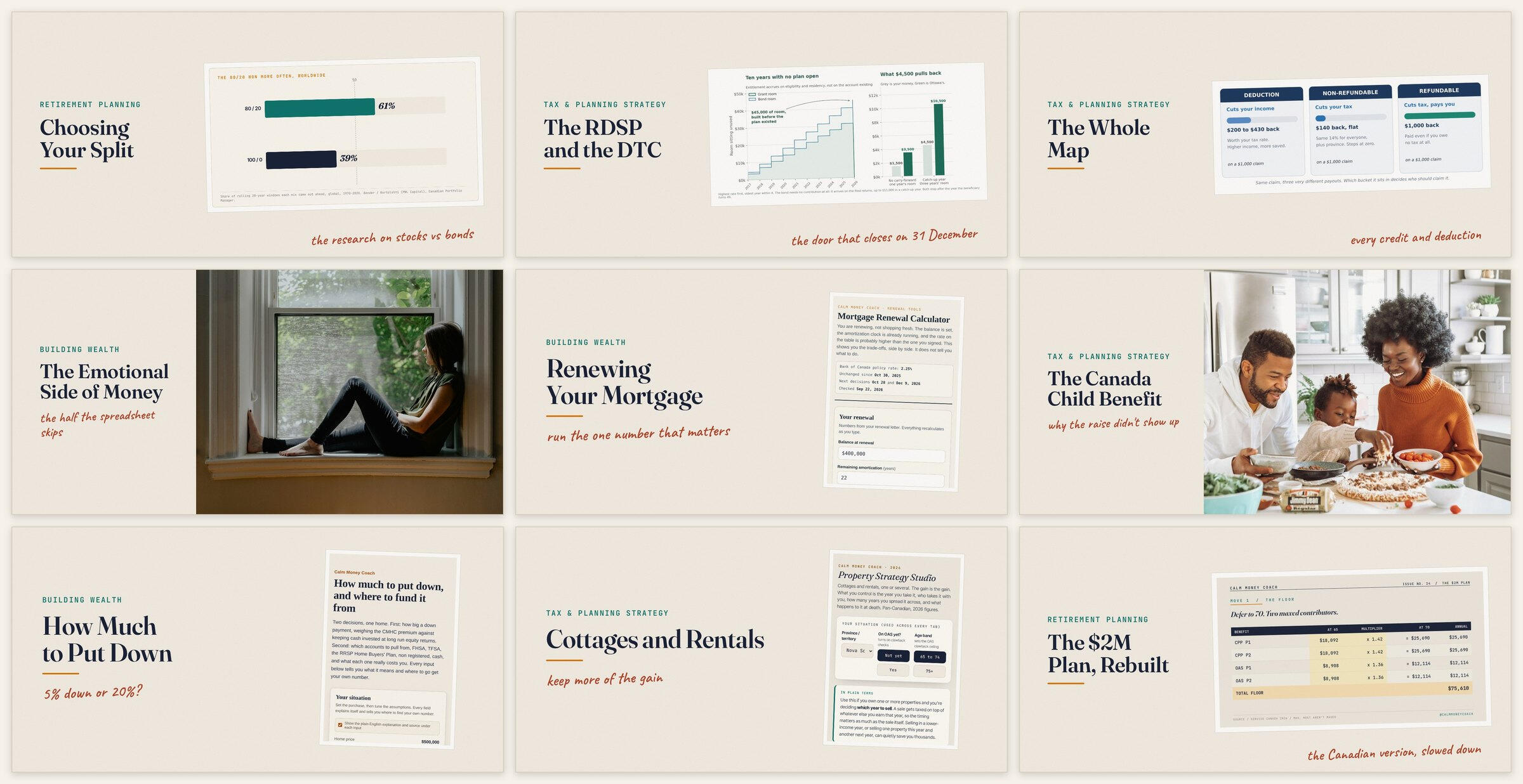
Most memberships describe themselves and show you nothing. So here it is. Every screen below is the real thing, run on an invented example household.The library. Well over 100 guides and calculators, all built for Canada. You can search it the way you'd ask a friend, answer one question and get pointed somewhere, or run the Yearly Money Checkup. That one takes about 10 minutes once a year and sorts a pile of half-worries into the few decisions that matter for you this year.
The Retirement Planner
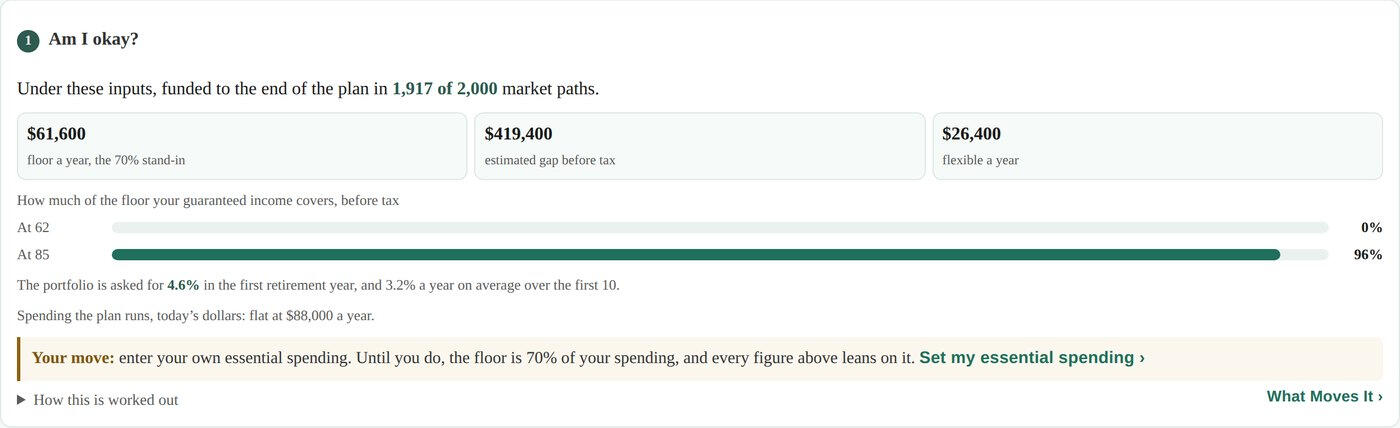
If you only open one thing, open this. It's the same engine I use on paid plans. You put in your accounts, pensions, province and what you want to spend, and it answers 6 questions in plain words, starting with the one you actually came with: am I okay?It runs in your browser, so your numbers stay on your computer.
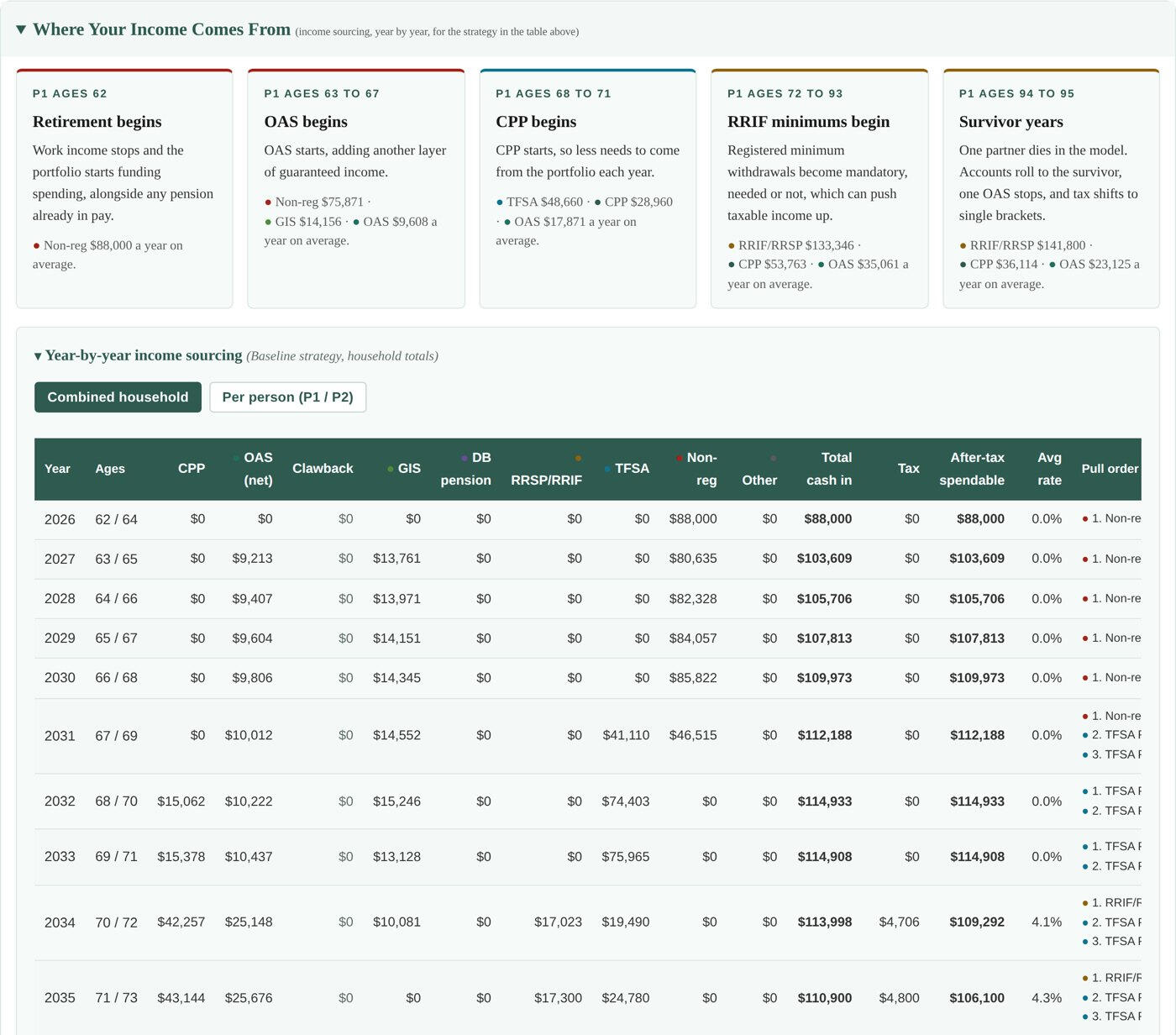
How do I actually take the money?This is the question I get asked a lot. Which account do I pull from, and when? The planner lays it out year by year: every source of income, the tax, and what's left to spend.
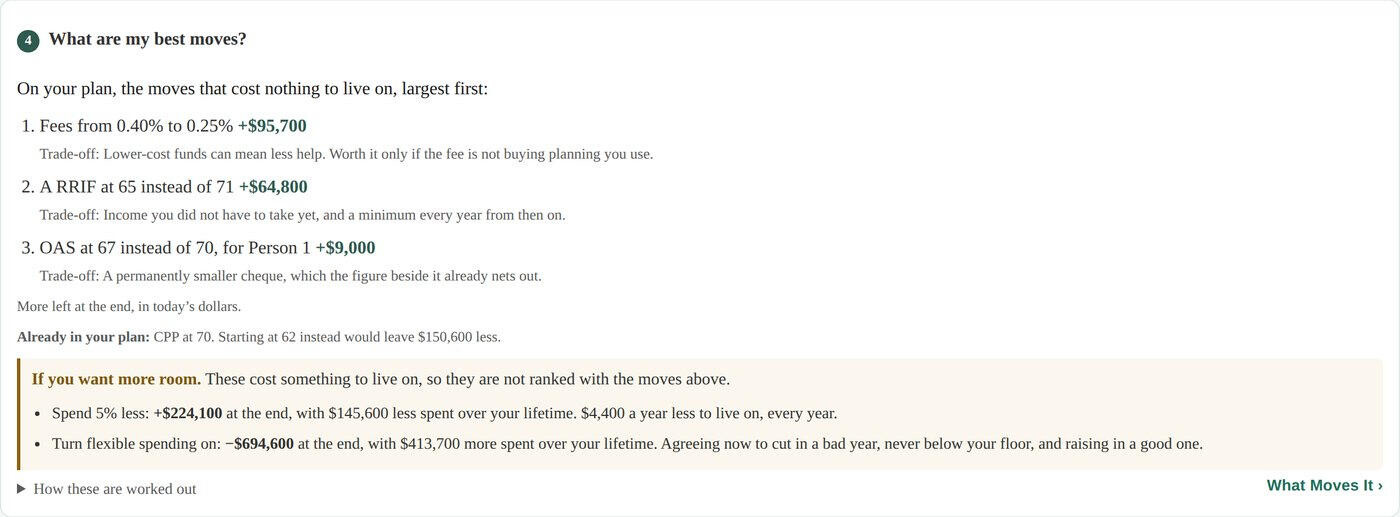
14 ways to draw it down, rankedIt tests 14 different orders for drawing your accounts down and ranks them on what's left after every dollar of tax. Then it lists your best moves: the changes that cost you nothing to live on, biggest first, each with the catch in one line.
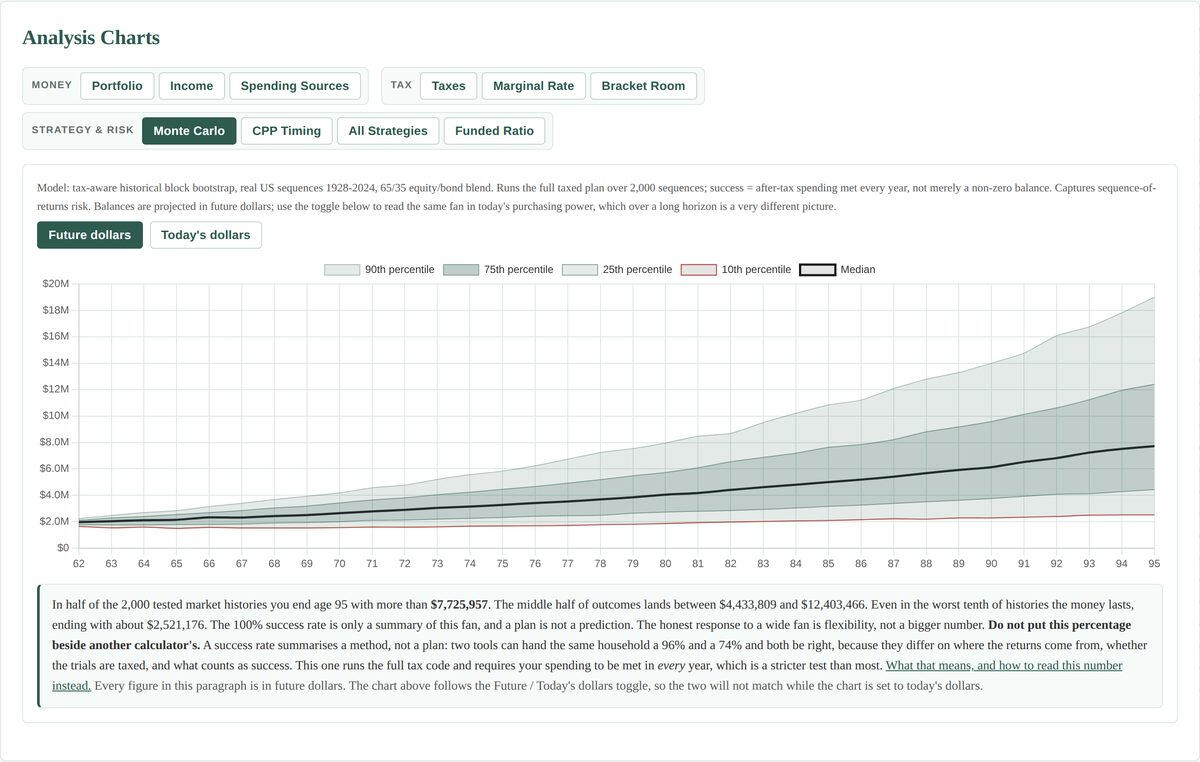
And a picture of the riskA success rate on its own tells you very little. So the planner draws the fan: 2,000 tested market histories, the middle path, and the worst tenth, so you can see what a weak start actually does to a plan.
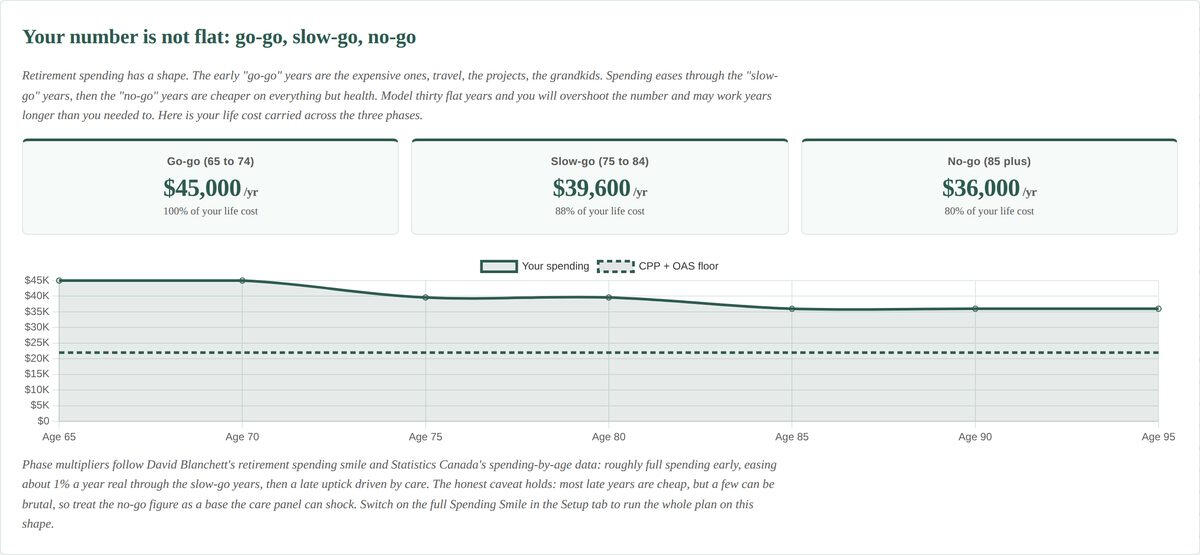
Spending has a shapeThe early years usually cost the most, with the travel and the projects, and then it eases. The planner models that shape, so you're not saving as if every year will be your most expensive one.
It isn't only retirement
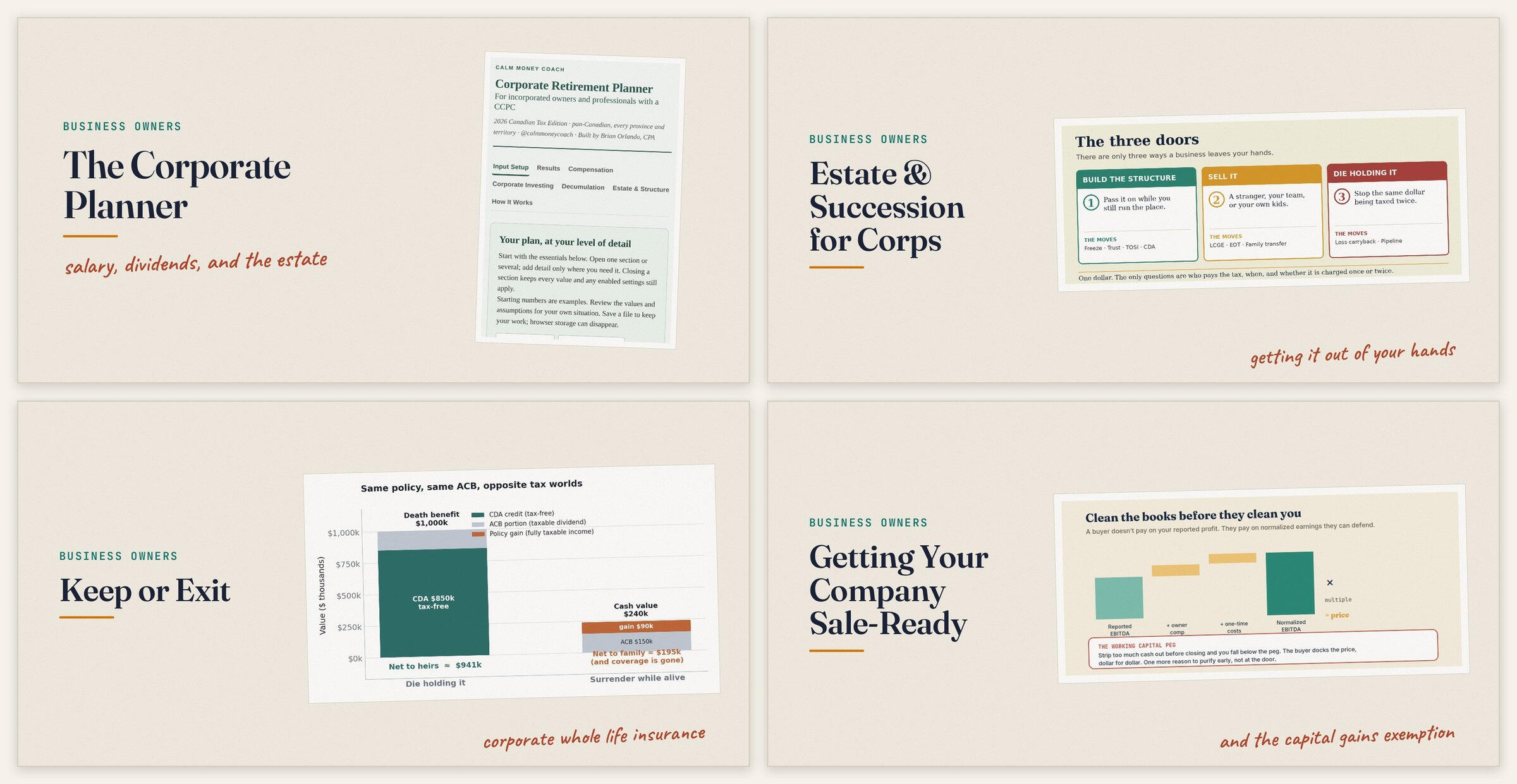
If you own a corporationThere's a planner for that too: salary against dividends, the passive income rules, and how much actually reaches your family at the end. As a CPA, this is the part I enjoy.
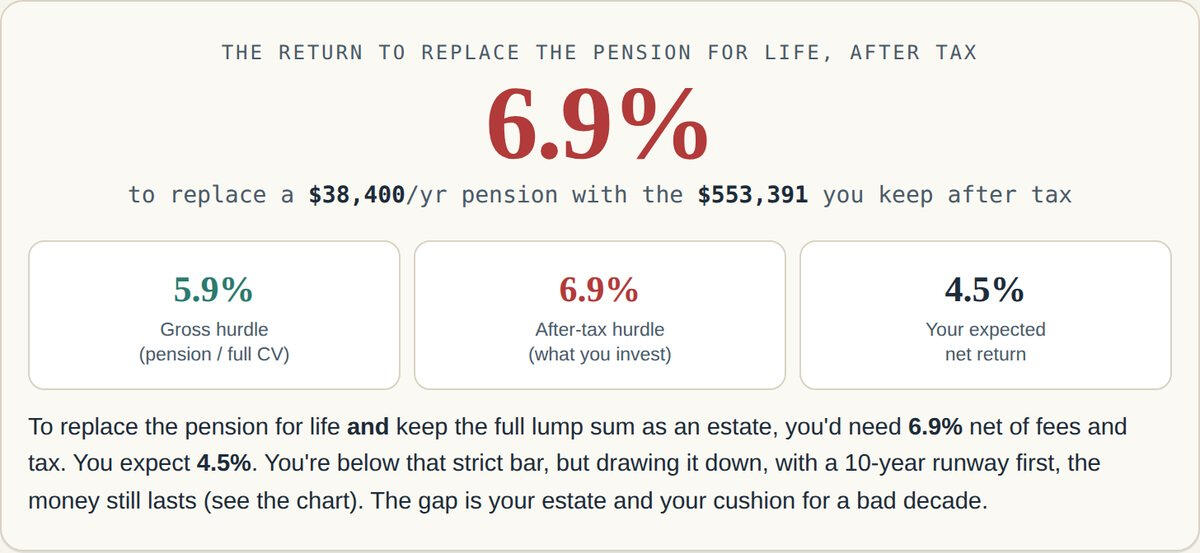
If someone offers you a pension buyoutThere's a tool for the one number that decides it: the return you'd have to earn, after tax and fees, to replace an income you'd otherwise have for life. It shows you the trade-off and leaves the pick to you.
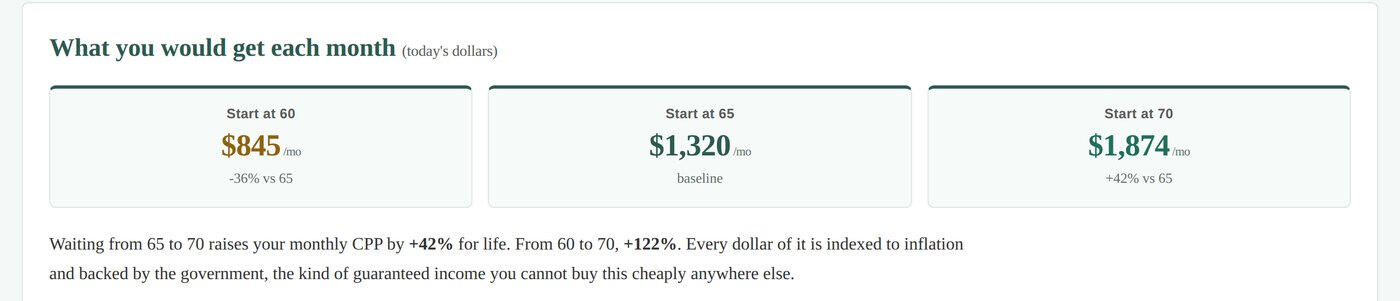
CPP and OAS timingStarting at 60, 65 or 70 is a decision about how high you want your guaranteed, inflation-indexed income to sit for the rest of your life. The tool starts from your real CPP number.
The rest of the shelf covers rent against buy, lease against buy against used, mortgage renewal, the Smith Manoeuvre, a cottage or a rental, severance, retiring abroad, coming home to Canada, and risk capacity against risk tolerance.
When someone dies
Nobody loves this part, and I get it. "What happens to all this after we're gone" is a hard sentence to type. So I built a whole corner of the Community for it, written to be read in small pieces.If one of you dies. If you're a couple, the planner runs your plan twice, once with each of you as the one left behind. Who goes first changes more than people expect: how much income drops, the tax rate the survivor pays on the RRIF they inherit, and whether the money still lasts.
The estate guide. 14 parts you can read one at a time, and you can search it. Beneficiary designations, the spousal rollover, trusts, multiple wills, the widow's penalty, and who to hire for each piece. The Executor's Guide and its workbook are in there too, because someone in your family is going to need it.A few things in there that cost real money to get wrong:• A RRIF that names a beneficiary instead of a successor annuitant.
• A TFSA where the same distinction costs the growth after death.
• A divorce that doesn't revoke a beneficiary designation.
• Quebec, where designations work differently.When you're ready to do the paperwork: for a straightforward will, an online will service is simple and cheap. When there's more going on, see a lawyer who looks at the whole picture, and do the powers of attorney at the same time.

And me, every month
Once a month there's a live Q&A where you can ask the messy version of your question, the one you'd never put in an email. There's also a board where members post what they want built and vote on each other's ideas, and a lot of the library started there. A few real ones that turned into a guide or a calculator:"We want to retire five years apart. How do we plan one household on two dates?""My RSUs vest next month and I don't know what gets taxed when.""We have a cottage and two kids. One wants to keep it, one wants it sold.""My son has a disability. How do I leave him money without costing him his benefits?"None of those can be answered with one number. Bring questions like that to the Q&A. It's also where people talk about the side of money that isn't math: the stress, the avoiding, and the conversation with a partner that keeps getting put off.
What it costs
Every way to work with me, on one table. Prices are before HST. For most people, the Community is the right fit.
Your Community price locks in the day you join. Whatever you pay at signup is what you renew at for as long as you stay, so a future price increase won't touch you. If you leave and come back later, you rejoin at whatever it costs then. Comprehensive prices are today's, and the January prices are confirmed in December.
Working with me one on one
Not taking new Comprehensive clients until January 2027. I'm finishing the plans already on my list first, and each of those deserves my full attention. If you're wondering where to start in the meantime, the Community is it.If you'd like me to do the whole thing for you, that's the Comprehensive Plan. I build it as a CPA around your real numbers, and you never log into anything. Your investments are part of the plan. I look at your asset mix, your fees and which accounts hold what, and show you how to keep it simple enough to run yourself. I don't recommend specific securities, and I never manage or trade your money.Single or couple. From $4,500 + HST, and most land between $5,000 and $6,000.With a corporation. $7,500 to $12,000 + HST. $7,500 for one company, $9,500 with a family trust, $12,000 for several companies or an estate freeze. It already includes the full household plan.One plan covers one household. That's you, or you and your spouse or partner, along with the kids you're raising. Your parents and your adult children are their own households, so each one would need a plan of their own. If you help support a parent or an adult child, I plan for what that support costs you.The price moves with complexity, and I'll tell you what yours costs before you commit.
If you need help before January, these are the places I send people:FP Canada's Find a Planner, to find a CFP near you. Advice Only Planners, a directory of Canadian planners who charge a fee and don't sell products. If the corporate piece is the hard part, say that when you search, because fewer of us do it. PWL Capital, if you'd like your investments managed as well as planned. And if you'd rather build your own plan, a do-it-yourself planning tool like Adviice is a good place to start.For wills and estates, STEP's public directory lists trust and estate practitioners, and your provincial law society can refer you to a lawyer near you.For tax returns and accounting, your province's CPA body keeps a public directory of licensed members and firms, for example CPA Ontario and CPA Nova Scotia. If your income is modest and your return is simple, the CRA's free tax clinics will file it for you at no cost.Who to look for. If you're hiring help yourself, these are the designations I'd look for first, and how each one is usually paid. Good people work outside this list too, but this is the typical setup.Financial planning: a CFP (Pl. Fin. in Quebec). A flat or hourly fee if they're advice-only, or paid through products or a percentage of your assets if they work for a bank, dealer or insurer.Managing your investments: a CFA or CIM working as a registered portfolio manager. Usually a percentage of the assets they manage. You can check anyone's registration at aretheyregistered.ca.Tax and accounting: a CPA. Usually hourly, or a fixed fee per return or year end.Wills, estates and trusts: a lawyer (a notary in Quebec), ideally one with a TEP from STEP. A flat fee for simple wills, hourly for estates and trusts.Anything cross-border: a TEP, if you're a US citizen in Canada, own US property, or are moving between the two. Pair them with a CPA and a US CPA or US Enrolled Agent who file both sides, usually for a fixed fee per return. STEP's directory above lists TEPs, and the IRS keeps a directory of credentialed US tax preparers you can search from Canada.Life and disability insurance: a licensed insurance advisor, ideally with a CLU for estate and business insurance. Usually paid commission by the insurer, so get more than one quote.Valuing or selling a business: a CBV (Chartered Business Valuator). A fixed or hourly fee.Mortgages: a licensed mortgage broker. Usually paid by the lender.In Quebec, Ontario and Saskatchewan the title "financial planner" is regulated. Elsewhere anyone can use it, so ask which designation they hold.And 2 free government tools I'd set up either way. My Service Canada Account has your real CPP statement, and CRA My Account has your RRSP and TFSA room.Out of scope: US persons, divorce in progress, complex blended-family estates, and tax filing.
If you'd rather listenNot ready to join anything? Fair. Here's me talking money for free. The Calm Money Coach podcast is the longer version of what I post on video. Retirement, tax, investing, and the part of money that isn't math, for Canadians who'd rather listen on a walk or in the car. Listen on SpotifyThe Wealthy Barber Podcast, with Dave Chilton. Why simple beats clever in personal finance, and the RRSP misconceptions I see every week. Watch on YouTubeToronto Star. The hidden risks of co-signing your kid's mortgage, and what to check before you do. Read the pieceCBC Maritime Noon. A live phone-in on retirement planning, with real callers and real questions. Listen on CBC
The free email list
Not ready to pay for anything? Totally fine, start here. My email list is free, there's nothing to log into, and it never turns into a bill. The RDSP files and the retirement workbook further down download on click, with no email at all. For education only.
Why I do this
I know the complicated stuff so you don't have to.
Money in Canada gets complicated fast. RRSPs, TFSAs, FHSAs, CPP, OAS and the clawback, 13 different sets of provincial and territorial tax rules, and a corporation on top if you own one.And the feelings count too. Money stress, shame about debt, avoiding the statements. That's often the real thing standing between a person and a plan, so I talk about it as much as the math.

About me
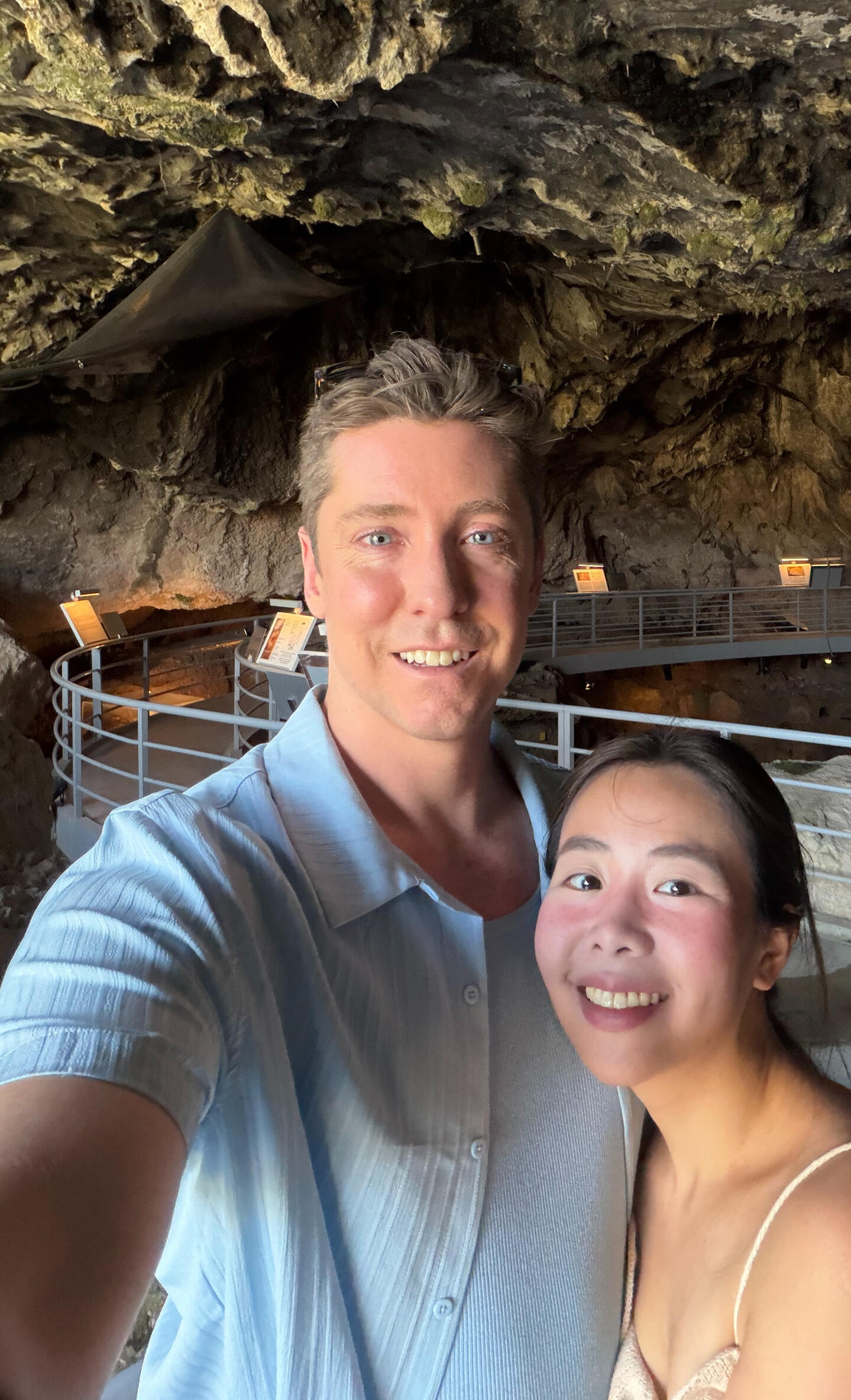
I'm Brian Orlando, a CPA in Halifax. I spent 16 years in audit at PwC, pharma and med device deals, and at Sonos, where I worked across accounting, corporate finance and IT product management. In 2026 I left the corporate track to do this full-time.The math of money was always the part I could do. What I kept seeing was the stress, the shame and the avoiding, and how much that costs people over the years. So the goal of everything here is a plan you can actually run on your own, with the numbers right and the noise turned down.The practice runs through CalmMoneyCoach Consulting Inc., Chartered Professional Accountant, a professional corporation registered with CPA Nova Scotia. It does planning and education only. I don't sell products or take commissions, and I don't recommend specific investments.
Still not sure where you fit? Email me a few sentences about your situation and I'll sort it in one reply. Media and business inquiries welcome too.CalmMoneyCoach Consulting Inc., Chartered Professional Accountant. A professional corporation registered with CPA Nova Scotia. Planning and education only. This isn't investment advice.
Terms and PrivacyLast updated: September 2026Scope
CalmMoneyCoach Consulting Inc. is a professional corporation registered with CPA Nova Scotia and carries on practice as a Chartered Professional Accountant firm. It provides planning and education only. Not investment, legal, tax, accounting, medical, mental-health, or therapy advice. Use of this Website does not create an advisor-client, accountant-client, or fiduciary relationship. A professional engagement begins only when both parties sign an engagement letter.Not investment advice
We are not registered as an adviser, dealer, or portfolio manager under National Instrument 31-103. No content on this Website, in newsletters, in videos, on the podcast, or in the community is a recommendation to buy, sell, or hold any specific security, fund, or ETF.Fee-for-service
We are a fee-for-service practice. We do not sell financial products and do not receive commissions or trailers.Canadian audience
Content is for a Canadian audience, with examples across provinces and territories. We do not provide US or other foreign tax, legal, or securities advice. If you have any cross-border element to your situation, consult a qualified specialist in the relevant jurisdiction.Confidentiality
We keep your information private except where law requires disclosure or you ask us to share it.Recording
No recording without mutual consent.Scheduling and cancellation
Minimum 24 hours notice to book or reschedule. Late arrivals may shorten the session. Missed or late cancellations may be charged.Payments
Community membership is paid at signup through Circle. Comprehensive Plan payment terms are set out in the engagement letter. Prices are shown before applicable taxes. HST is added at checkout where applicable.No guarantees
Outcomes are not guaranteed. You are responsible for your financial decisions. Past investment performance is not indicative of future results.Privacy
What we collect: name, email, booking details, intake answers, session notes, payment status, basic site usage data.
Why: to deliver the services, communicate with you, take payment, run the business, and meet legal obligations.
Where stored: Google Workspace, Stripe, Circle, Kit.
Where processed: these providers may process data outside Canada. We remain responsible for their handling of your data and use safeguards consistent with Canadian privacy law.
Retention: at least seven years from the end of the tax year the records relate to, consistent with CRA and CPA Nova Scotia requirements.
Sharing: only with these providers or where required by law.
Your choices: request a copy, corrections, or deletion when permitted.Intellectual property
All Website content is owned by CalmMoneyCoach Consulting Inc. Personal, non-commercial use only. No reproduction, redistribution, or use for commercial purposes (including AI training) without written permission.Governing law
Nova Scotia, Canada.Contact
[email protected]